
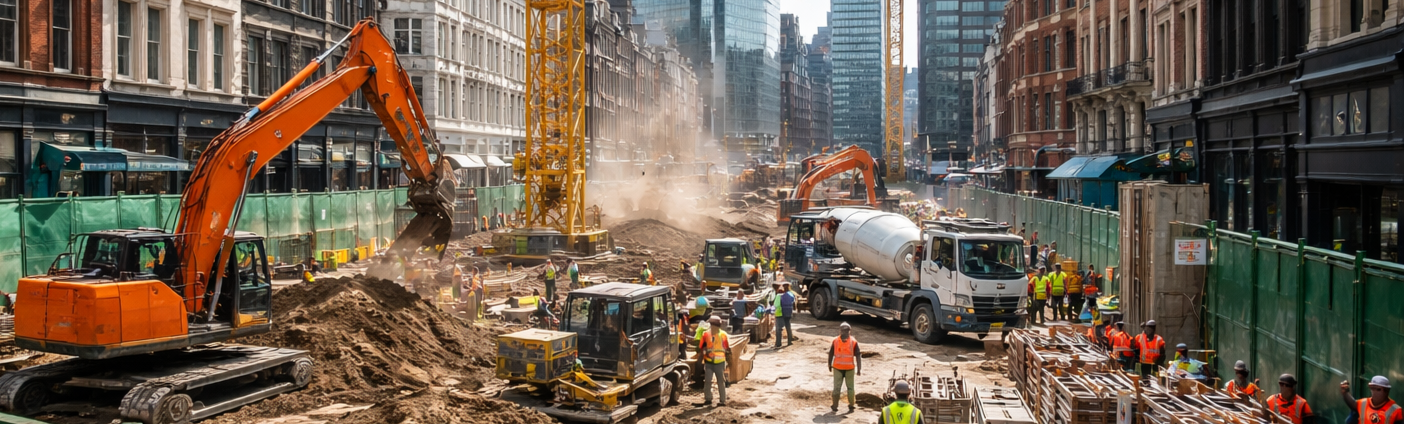
Westminster City Council has introduced an updated Code of Construction Practice, coming into effect in 2026, which sets out stricter rules for how building works are carried out across the borough. In simple terms, the aim is to reduce the disruption that construction can cause to neighbours and the wider environment, while also pushing developers towards cleaner and more sustainable methods of building. The new code forms part of a wider strategy to improve air quality, reduce carbon emissions and create healthier neighbourhoods across Westminster.
The updated rules place a much stronger emphasis on how construction sites operate day to day. Developers will be expected to use cleaner, lower emission machinery, with a gradual shift towards electric equipment over the coming years. There will also be more comprehensive monitoring of dust, noise and vibration, with some of this information made publicly available in real time. This means local residents will have far greater visibility over what is happening on nearby sites, and developers will need to be more proactive in managing disruption.
The scope of the code has also been widened. It now applies more clearly to mid sized projects and major refurbishments, not just large scale developments. In addition, there is a stronger focus on reducing construction waste, reusing materials where possible, and carefully managing deliveries and traffic around sites. Developers will need to submit detailed plans before starting work, setting out how they will control environmental impact and communicate with neighbours throughout the build.
In terms of timing, the new code was formally introduced in March 2026. It will apply to all new construction management plans submitted from 1 June 2026, and then to all existing and ongoing sites from 1 September 2026. This means that even projects already underway will need to adapt to the new standards later in the year.
For homeowners planning renovations, the impact will depend largely on the scale of the works. Smaller internal refurbishments are unlikely to be significantly affected. However, larger projects such as extensions, structural alterations or basement works will likely fall within the scope of the code. In these cases, homeowners or their contractors may need to submit detailed construction plans, follow stricter working practices, and allow for additional costs linked to monitoring and compliance. In practical terms, this could mean longer lead times before work begins and a more structured approach to managing the build.
Overall, while the updated code introduces more regulation, its intention is clear. It is designed to make construction in Westminster quieter, cleaner and more considerate, helping to protect the day to day living environment for residents while still allowing the borough to evolve.


